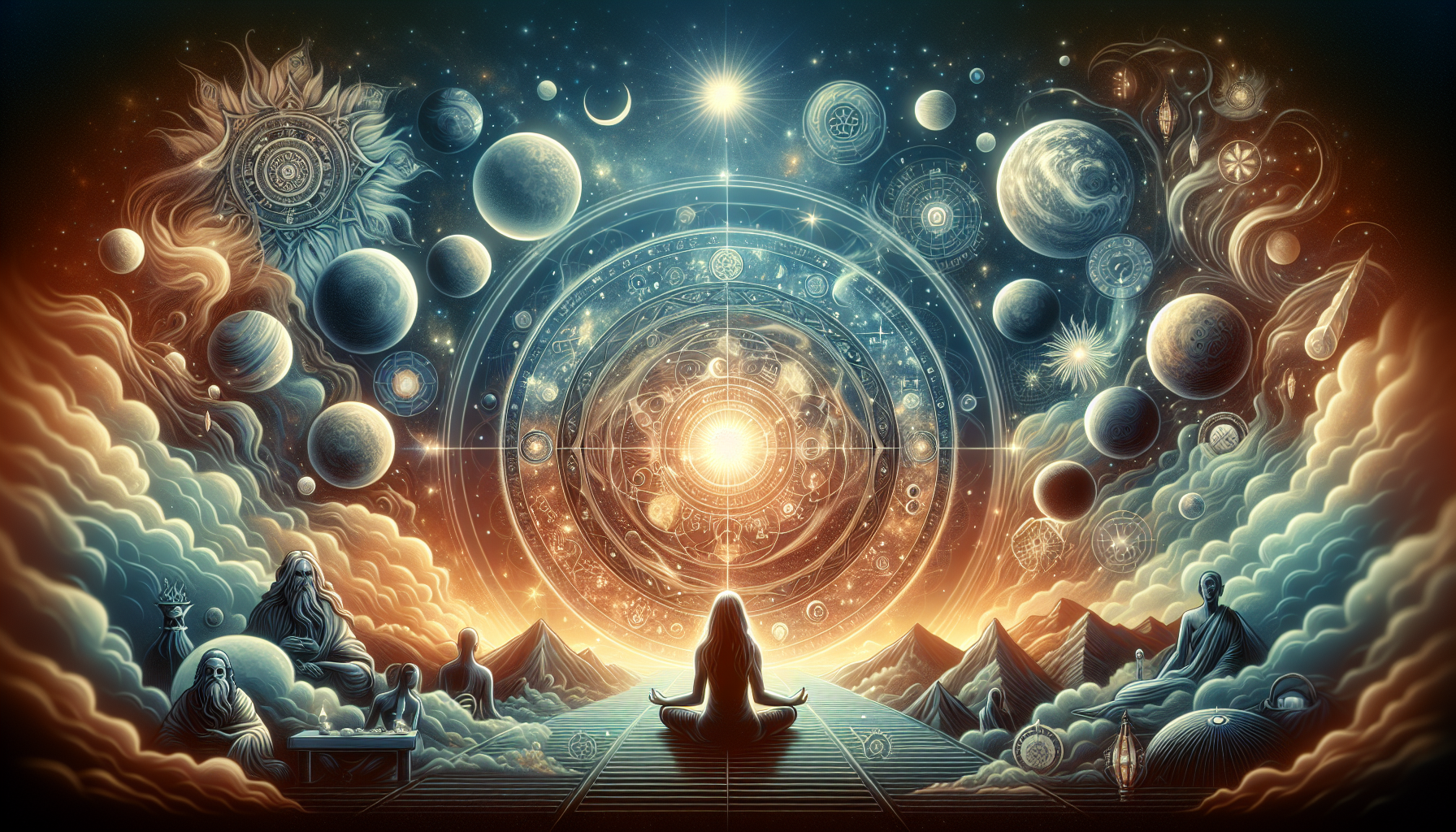
The concept of the Vedic Cosmos is a profound and complex one that intertwines elements of ancient Indian philosophy, spirituality, and cosmology. Originating from the Vedas, one of the oldest sacred texts in the world, this framework offers insights into the nature of existence, the universe, and our place within it. By exploring the principles of the Vedic Cosmos, individuals can gain a deeper understanding of their connection to the universe and the spiritual laws that govern it.
Understanding the Vedic Cosmos
The Vedic texts describe a universe that is both vast and intricate, with layers of reality that transcend our ordinary perception. The term Vedic Cosmos refers to the holistic view of the universe as painted by ancient sages and philosophers. This view encompasses various elements, including the physical universe, metaphysical concepts, and the spiritual dimensions of existence.
The Structure of the Universe
In Vedic cosmology, the universe is often depicted as having multiple realms and dimensions. These include:
- The Physical Realm: The tangible world we inhabit, consisting of matter and energy.
- The Astral Realm: A non-physical space where souls exist before and after physical life.
- The Causal Realm: The source of creation, where the fundamental vibrations of consciousness reside.
The interplay between these realms suggests that our physical reality is just one aspect of a much larger cosmos. This can be illustrated by comparing the Vedic view to modern scientific concepts. Just as physicists explore the multiverse theory and dimensions beyond our comprehension, Vedic philosophers discuss levels of existence that interact in ways that may not be perceivable to the ordinary mind.
Key Philosophical Concepts
Several key concepts help illustrate the depth of the Vedic Cosmos:
- Brahman: The ultimate reality, the source of all existence, comparable to the concept of the universe in quantum physics.
- Atman: The individual soul or consciousness that is an integral part of the Brahman.
- Maya: The illusion or the deceptive nature of the physical world that distracts souls from realizing their true nature.
The relationship between Brahman and Atman is crucial in understanding the Vedic perspective. Just as modern science seeks to explore the fundamental building blocks of reality, Vedic philosophy encourages individuals to look beyond the material world to discover their connection to the divine.
Exploring the Vedic Cosmos in Daily Life
Understanding the Vedic Cosmos is not only an intellectual pursuit but also a way to enrich everyday life. Here are several practices rooted in Vedic philosophy that can enhance one’s connection to the cosmos:
- Meditation: Engaging in meditation practices can help individuals access higher states of consciousness, promoting a sense of unity with the cosmos.
- Astrology: Vedic astrology (Jyotisha) provides insights into how celestial bodies influence human life. By studying astrological charts, individuals can discern patterns that reflect their personal journeys.
- Rituals and Offerings: Performing rituals, known as pujas, helps establish a connection with divine energies and can align one’s intentions with the greater universal order.
By integrating these practices into daily life, individuals can cultivate a greater understanding of themselves within the Vedic Cosmos.
The Role of Numbers in Vedic Cosmology
Numerology holds significant importance in Vedic philosophy, providing insights into the cosmic order. For instance, sacred numbers such as 108 are often used in various practices, from chanting mantras to designing temple architecture. The following table highlights some key numbers in Vedic cosmology and their meanings:
- 1: Represents unity and the singular nature of Brahman.
- 3: Symbolizes the triad of creation, preservation, and destruction (Brahma, Vishnu, Shiva).
- 7: Represents the seven chakras, the energy centers in the body.
- 108: Considered a sacred number, related to the distance between the Earth and the Sun.
These numbers show how deeply interwoven mathematics and spirituality are in the Vedic tradition, reflecting a universe governed by mathematical harmony.
Transformative Power of the Vedic Cosmos
Engaging with the principles of the Vedic Cosmos has the potential to transform one’s perspective on life. Recognizing that we are part of an expansive universe can foster a sense of purpose and interconnectedness. This realization can lead to:
- Increased Awareness: Understanding one’s actions and their ripple effects in the cosmos encourages more mindful living.
- Spiritual Growth: Embracing the connectedness of all beings inspires compassion and love towards others.
- Holistic Perspective: Viewing challenges as part of a larger cosmic journey can provide solace and understanding during difficult times.
The Vedic Cosmos encourages individuals to look beyond the surface, exploring their deeper spiritual essence and role in the universe.
Frequently Asked Questions
- What is the Vedic Cosmos? The Vedic Cosmos refers to the comprehensive understanding of the universe as described in ancient Vedic texts, encompassing physical, astral, and causal realms.
- How does Vedic philosophy explain the nature of reality? Vedic philosophy posits that reality is made up of multiple layers that intertwine, with the ultimate reality being Brahman, which is the source of all existence.
- What are some practices to connect with the Vedic Cosmos? Practices such as meditation, Vedic astrology, and performing rituals (pujas) can help individuals connect with the greater cosmos.
- Why is numerology important in Vedic cosmology? Numbers hold symbolic meanings that reflect cosmic laws and spiritual principles, illustrating the harmony inherent in the universe.
- How can understanding the Vedic Cosmos enhance personal growth? Awareness of our interconnectedness encourages mindfulness, compassion, and a holistic approach to life, supporting personal and spiritual development.
- Can anyone practice Vedic meditation? Yes, Vedic meditation techniques are accessible to everyone and can be tailored to accommodate individuals’ needs and experiences.
- How does Vedic astrology differ from Western astrology? Vedic astrology focuses on a sidereal zodiac based on the fixed positions of stars, whereas Western astrology primarily uses a tropical zodiac influenced by the seasons.
Engaging with the Vedic Cosmos provides a rich tapestry of knowledge, bridging ancient wisdom with contemporary understanding. By exploring these concepts, individuals can embark on a journey of discovery that reveals the profound connection between themselves and the universe. This exploration not only enriches one’s spiritual life but also enhances one’s practical approach to daily challenges, fostering a holistic understanding of existence.