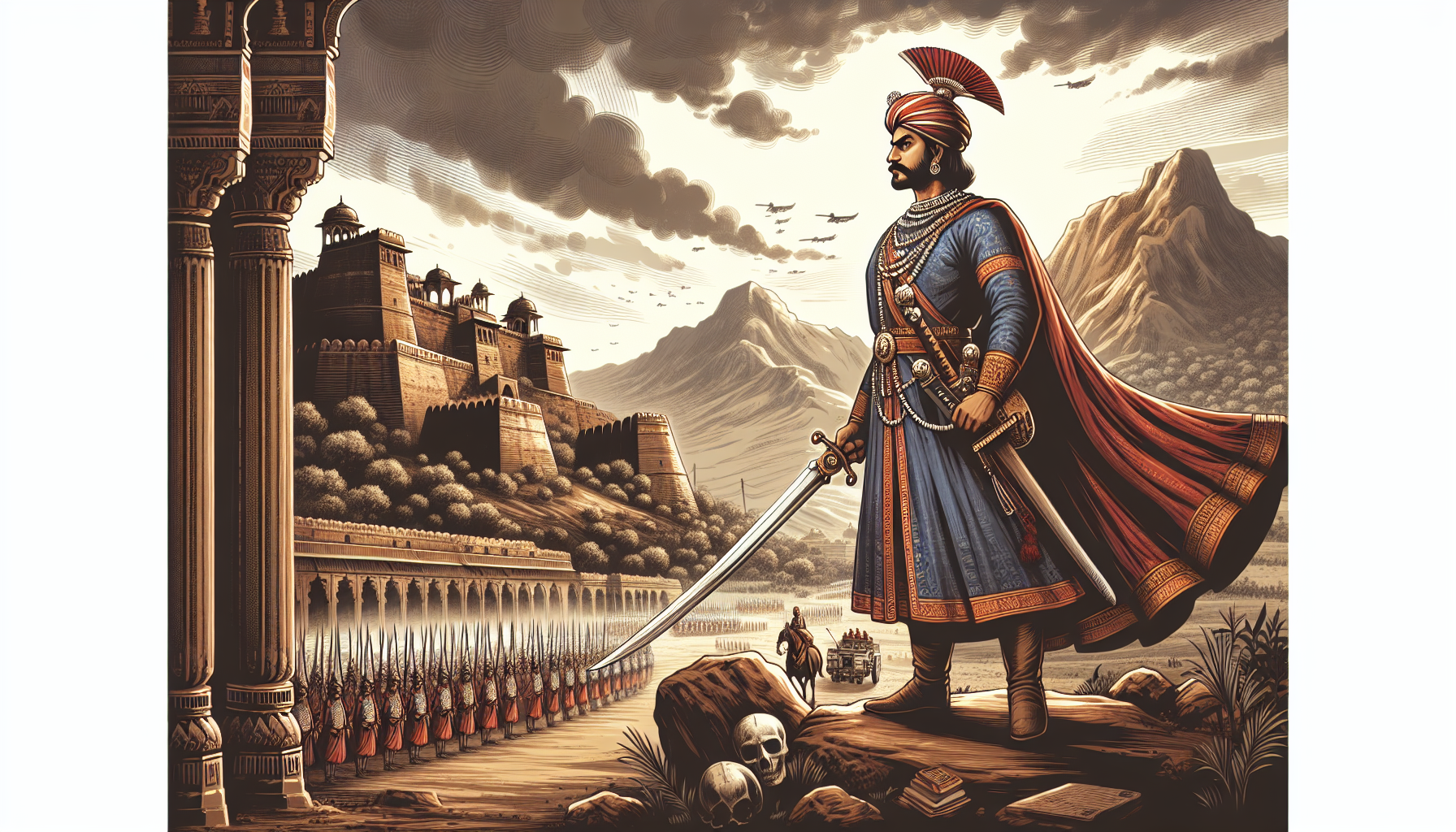
Shivaji Maharaj, also known as Chhatrapati Shivaji Maharaj, was a legendary figure in Indian history and a symbol of courage and valor. Born in 1630, he is revered for establishing the Maratha Empire and is considered one of the greatest warriors in Indian history. His legacy continues to inspire millions, especially in Maharashtra, where he is celebrated as a hero and a visionary leader. This essay explores the life, achievements, and impact of Shivaji Maharaj, reflecting on his significance in Indian culture and history.
Early Life and Background
Shivaji Maharaj was born to Chhatrapati Shahaji Bhosale and Jijabai, a couple deeply rooted in the history of Maharashtra. His mother’s teachings instilled in him a strong sense of patriotism and justice. Shivaji grew up in the fort of Shivneri, where he was exposed to the teachings of renowned regional warriors and the principles of administration.
At the young age of 16, Shivaji began his quest for independence from the Mughal Empire, laying the foundation for his legacy. With an army that included both soldiers and locals, he captured Torna Fort, marking his entry into the world of military strategy and governance.
Military Strategies and Warfare
Shivaji Maharaj was not only a skilled warrior but also a brilliant tactician. He effectively used guerrilla warfare techniques to combat larger Mughal forces. His understanding of the terrain, coupled with his innovative strategies, enabled him to outmaneuver his enemies.
Some of his notable military strategies included:
- Guerrilla Tactics: Utilizing ambushes and surprise attacks, he often caught his enemies off guard.
- Fort Siege: He strategically captured numerous forts in Maharashtra and established a network for defense and communication.
- Naval Power: Recognizing the importance of a strong navy, he developed the Maratha navy to protect the western coastline from foreign invasions.
The success of these strategies not only expanded his territory but also solidified his reputation as a formidable leader.
Administrative Reforms
Shivaji Maharaj was a visionary leader who understood the intricacies of governance. He implemented several administrative reforms that laid the groundwork for an effective and just system. His administration can be characterized by:
- Council of Ministers: He established a council to assist in governance, ensuring that various aspects of administration were managed efficiently.
- Revenue System: Shivaji introduced a fair revenue collection system, minimizing corruption and ensuring that the farmers were not overburdened.
- Social Equality: He promoted the idea of meritocracy, where individuals were selected for roles based on their abilities rather than their caste or background.
These reforms contributed to a more organized and efficient administration, fostering trust among his subjects.
Cultural Contributions
Shivaji Maharaj was not just a warrior; he was also a patron of culture and arts. He encouraged the development of Marathi literature and played a significant role in promoting Marathi as a prominent language. His court included famed poets like Sant Tukaram, who contributed to the Bhakti movement through their works.
Furthermore, he championed the cause of Hindu revivalism during a time when India faced religious strife. His efforts in promoting Hindu culture and traditions resonated deeply with the people, ensuring his status as a cultural icon.
Legacy and Commemoration
Shivaji Maharaj’s legacy extends beyond his lifetime. He is celebrated for his vision of a free and united India, and his principles of leadership and governance continue to inspire leaders and citizens alike. Statues and memorials dedicated to him can be found across India, with the most famous being the statue in the Arabian Sea, which pays homage to his contributions.
Various festivals, such as Shiv Jayanti, commemorate his birthday, uniting people in celebration of his life and ideals. Schools, universities, and organizations often hold essay competitions and debates on Shivaji Maharaj’s life, ensuring that his story is passed on to future generations.
Frequently Asked Questions
Who was Shivaji Maharaj?
Shivaji Maharaj was the founder of the Maratha Empire in western India in the 17th century. He is remembered for his military strategies, administrative reforms, and contributions to Indian culture.
What are some of Shivaji Maharaj’s notable achievements?
Some of his notable achievements include the establishment of a competent navy, the introduction of an effective revenue system, and the capturing of several significant forts in Maharashtra.
How did Shivaji Maharaj contribute to Indian culture?
Shivaji Maharaj promoted Marathi literature, supported the arts, and revived Hindu traditions during a period of unrest, ensuring that his culture continued to thrive.
Why is Shivaji Maharaj considered a great leader?
He is considered a great leader due to his exceptional military strategies, visionary governance, and his ability to unite and inspire people towards a common cause.
What is Shiv Jayanti?
Shiv Jayanti is the celebration of Shivaji Maharaj’s birthday, observed with processions, cultural programs, and various commemorative events across Maharashtra and beyond.
How did Shivaji Maharaj’s administration differ from others?
Shivaji’s administration was characterized by inclusivity and fairness; he focused on meritocracy and implemented a revenue system that protected farmers from exploitation.
What is the significance of Shivaji Maharaj’s forts?
The forts captured and built by Shivaji Maharaj were integral for the defense of the Maratha Empire and served as strategic points of governance and military operations.
In summary, Shivaji Maharaj remains a monumental figure in Indian history, whose life is a testament to bravery, leadership, and the unyielding spirit of freedom. His story, filled with triumphs and trials, continues to inspire generations, making him a timeless hero of India. As we reflect on his contributions, it becomes clear that his vision for a united and free India is as relevant today as it was in the 17th century.