
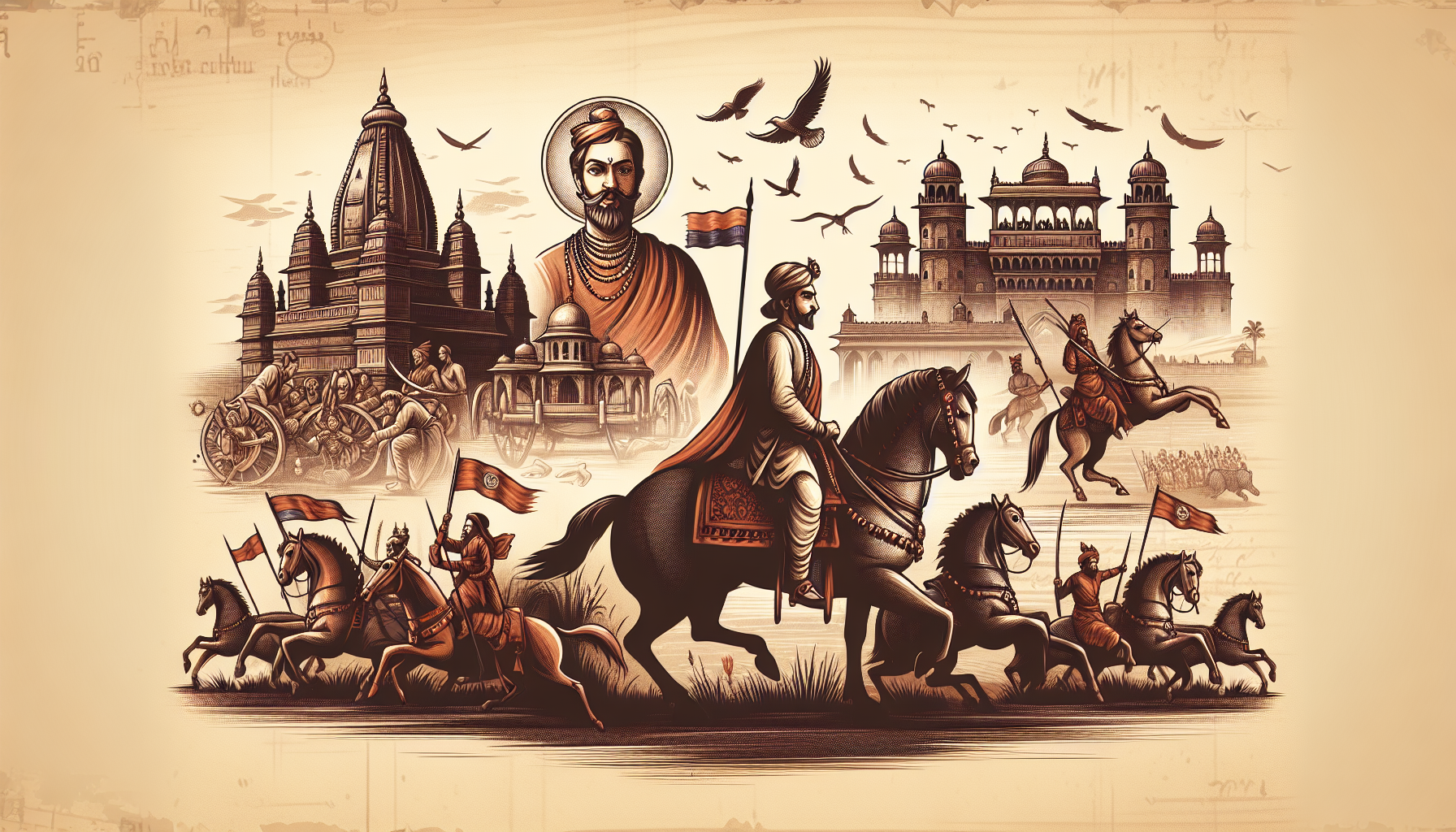
Shivaji Maharaj, the revered Maratha king, is not only known for his military prowess and valiant leadership but also for his profound thoughts that continue to inspire people to this day. His ideologies revolved around governance, respect for diversity, and the importance of self-governance. Understanding Shivaji Maharaj’s thoughts offers insights into effective leadership, strategy, and resilience that can be applied in contemporary scenarios.
The Essence of Shivaji Maharaj’s Leadership
Shivaji Maharaj’s leadership style was built on the principles of bravery, loyalty, and inclusiveness. He envisioned a strong and unified kingdom, advocating for the rights of his people and promoting welfare. His ability to unite various communities under a single banner was remarkable, showcasing his belief in the strength of unity.
Values of Leadership
Courage and Valor: A true leader, as exemplified by Shivaji Maharaj, shows courage in the face of adversity. His numerous battles against the Mughal Empire showcased not just military strategy but also an unwavering spirit to protect his land and people.
Inclusiveness: Shivaji Maharaj’s administration was a blend of various cultures and religions. He appointed individuals based on merit, regardless of their backgrounds, promoting a sense of belonging among his subjects.
Welfare of the People: Central to Shivaji’s rule was the commitment to the welfare of his citizens. He instituted reforms focused on agriculture, trade, and public health, which contributed to the prosperity of his kingdom.
Strategic Thinking
Shivaji Maharaj was also a master strategist. His guerilla warfare tactics and knowledge of local geography gave him an upper hand against his opponents. He understood that victory is not merely about brute force but also about using intelligence and resources wisely.
Military Innovations
Surprise Attacks: Shivaji often engaged in surprise raids, catching his enemies off guard. This is evident in his conquest of Torna Fort, where strategic planning played an essential role.
Intelligence Networks: He established a solid intelligence network, giving him crucial information about enemy movements and strategies, enabling swift and effective responses.
Shivaji Maharaj’s Thoughts on Governance
Governance was a critical aspect of Shivaji Maharaj’s philosophy. He believed in the concept of Swaraj, or self-rule, which emphasized the importance of local governance and autonomy.
Principles of Swaraj
Empowerment: Shivaji encouraged his subjects to take part in governance, ensuring their voices were heard. This empowerment led to a more engaged and responsible citizenry.
Justice and Fairness: He believed in the rule of law and ensured that justice was accessible to all, promoting equality within his empire.
Civic Responsibilities: Shivaji emphasized the importance of civic duties among his citizens, fostering a sense of community and shared responsibility.
Examples of Good Governance
Tax Reforms: Shivaji introduced fair taxation systems that alleviated the burden on farmers while ensuring the kingdom’s treasury remained robust.
Religious Tolerance: His respect for different religions fostered peace among diverse groups, allowing them to coexist harmoniously within his territories.
The Philosophical Insights of Shivaji Maharaj
Shivaji Maharaj’s thoughts extend into the realm of philosophy, focusing on ethics and morality in leadership. His quotes often reflect a deep understanding of human nature and the responsibilities that come with power.
Key Philosophical Ideas
Integrity and Ethics: He believed that a true leader must act with integrity and uphold ethical standards. This notion can inspire modern leaders to prioritize honesty and transparency.
Resilience in Adversity: Shivaji’s life is a testament to resilience. He faced numerous challenges, but his ability to bounce back and continue fighting for his ideals serves as motivation.
Notable Quotes
“Freedom is not a gift but a right.” This statement reflects his belief in self-governance and the intrinsic right of people to govern themselves.
“A leader is expected to be the foremost in courage and the last in comfort.” This highlights the sacrifices that come with leadership and the commitment required to serve others.
Application of Shivaji Maharaj’s Thoughts Today
In today’s fast-paced world, the teachings of Shivaji Maharaj can provide valuable lessons across various fields, including business, governance, and personal development.
Business Leadership
Strategic Planning: Leaders can draw from Shivaji’s tactics of careful strategy and planning. In a business context, this could translate into conducting thorough market research and understanding consumer behavior.
Building Diverse Teams: Encouraging inclusiveness by building teams from diverse backgrounds can lead to innovative solutions and a more comprehensive understanding of market needs.
Community Governance
Local Governance Models: Implementing local governance models that reflect Shivaji’s ideals can empower communities to take charge of their own development, fostering accountability and enhancing local knowledge.
Participatory Political Processes: By promoting civic engagement and participation in political processes, communities can mirror Shivaji’s methodology of ensuring that every voice is heard and respected.
Frequently Asked Questions
What is the significance of Shivaji Maharaj’s thoughts in modern leadership? Shivaji Maharaj’s thoughts emphasize the importance of bravery, ethical governance, and inclusivity in leadership. These principles remain relevant for today’s leaders in navigating challenges.
How did Shivaji Maharaj promote religious tolerance? He appointed people from different religions to key positions and established laws that protected the rights of all communities within his kingdom.
What lessons from Shivaji Maharaj can be applied to personal development? His resilience, commitment to ethics, and emphasis on self-governance inspire individuals to take charge of their growth and uphold integrity.
What was the role of strategy in Shivaji Maharaj’s battles? Strategy played a critical role in his success; he utilized guerilla tactics, extensive reconnaissance, and knowledge of local terrain to outsmart larger and better-equipped forces.
How can businesses adopt Shivaji Maharaj’s principles? Businesses can adopt his principles by focusing on strategic planning, fostering diversity in teams, and continuously engaging with their customer base to ensure alignment with needs.
What is Swaraj and why is it important in Shivaji Maharaj’s philosophy? Swaraj means self-rule. It is crucial as it emphasizes empowerment and autonomy, allowing people to govern themselves and contribute positively to society.
Can Shivaji Maharaj’s thoughts inspire social movements today? Yes, his emphasis on justice, empowerment, and ethical leadership can inspire social movements advocating for equality and rights, motivating individuals and communities to strive for positive change.
In reflecting on the profound thoughts of Shivaji Maharaj, one can appreciate how his legacy continues to inspire not just patriots but leaders across various fields. His life and ideologies serve as a reminder of the power of integrity, resilience, and inclusive governance, shaping a better society for future generations.